Design and Planning of Intelligent Service Robot
In the context of the global epidemic, to promote the experiential economy brought about by the age of intelligence, service robots work together to deal with labor costs and forward power. After the epidemic, it brought more considerations, such as safety and intelligence, touchless service between people, and speeding up the investment in shopping malls to deal with the problems of residents' daily scenes.
& nbsp;
01 Planning process of service robot
& nbsp;
In the whole process of robot planning, the system planning and skill team are usually independent in the development team at this stage. The hardware and software teams are separated into two planning lines. The upstream and downstream work is not necessarily connected. The overall rationality of the planning needs to be considered. In terms of appearance planning, according to the product positioning and user groups, the appearance products that meet the aesthetic and shopping standards of the target groups are planned. In terms of structural planning, the cooperative appearance planning can carry out the structural planning of the mold, reduce the difficulty of disorder as much as possible, and facilitate mass production in assembly.
02 Service robot intelligent system planning is an innovative planning combining skills and planning.
& nbsp;
Build a robot's ability to perceive in that environment, machine-skills- sensors.
& nbsp;
The ability framework planning of robots determines the ability and intelligence level of robots, and is the system foundation of intelligent interaction. Understand the development of robot skills, avoid the failure of products when planning the intelligent system, and find the best balance point in the cost control.
& nbsp;
& nbsp;
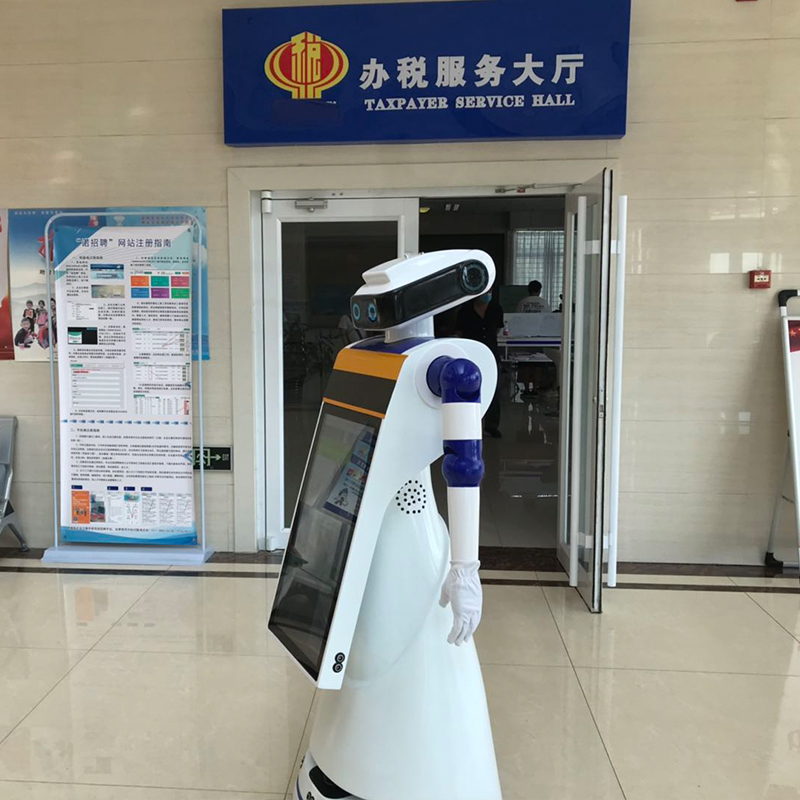
Robot multimodal response planning makes interaction more natural, behavior-environment- interaction .
& nbsp;
& nbsp;
The ergonomic planning of service robots should be inclusive in the public environment.
& nbsp;
Construct the experience elements of the robot in the application environment, which is conducive to the recovery of the scene and the discovery of the entry point for the user to experience innovation. Traditional planning methods pay more attention to mission performance and operational experience, and the planning of robots incorporates more levels of environmental scenarios and human-system interaction. Construction is also a detailed description of the results of scene analysis. In the hotel robot service scene, satisfactory addresses, people and things constitute the elements of the scene.
& nbsp;
& nbsp;
Interpersonal distance is in different cultural backgrounds, the principle of interpersonal distance will be different, but the basic law is the same.
& nbsp;
Design and Planning of Intelligent Service Robot
& nbsp;
According to the social distance of interpersonal contact, the service robot is the social conversation distance.
Service robot personification planning is an important element in the interaction process.
& nbsp;
Emotional experience is the standard of robot intelligence, and users have anthropomorphic waiting and demands for robots. Robots can't generate emotions, but they can plan characters. Determine the positioning and basic ability of the characters, endow them with emotional response behavior, and further personify the characters into three-dimensional robots.
& nbsp;
In the hotel service scene, the service robot provides service with the character of the waiter. When interacting with the environment, the behavior and expression of the robot should comply with the etiquette standards of the service personnel. In terms of mood planning, the expression of reaction expression after identification is in line with the service status of the waiter. In terms of voice response behavior, speech management is in line with the language skills of service personnel.
The service planning of service robots is based on the experience of perfecting the experience .
& nbsp;
Design and Planning of Intelligent Service Robot
& nbsp;
In the hotel scenario, the stakeholders of the robot are the service provider and the service receiver, and the service contact is divided into close and important degrees. Robots are used in scenarios that usually require completion of missions such as delivery services, driving to avoid obstacles, taking elevators, coming back to charge, contacting customers and administrators, etc. In the mission of the whole service, through planning, stakeholders have an efficient and pleasant experience.
First of all, in the production process, the collaboration of hardware appearance and software is the first element of experience, and the innovation in appearance should consider the user's tolerance and rationality. Secondly, the planning of intelligent system, the planning of aptitude framework centered on perception, and the multimodal response of different channels will tend to the planning of natural interaction based on cognition in the future.
& nbsp;
Founded in 2014 , Guangzhou Aobo Information Technology Co., Ltd. integrates scientific research and development, industrial design, manufacturing and product marketing of intelligent service robot products. With the mission of "building an intelligent life", it has grown into a global advanced provider of R & D, manufacturing and application solutions for commercial service-oriented robots. It is committed to providing the most innovative commercial robot products and application solutions for individual and enterprise users.
AoBo obtained the National High-tech Enterprise Certificate in 2016, with independent intellectual property rights and core technologies, and obtained 108 national patents. Through strategic cooperation with top international technical institutions, it has accumulated a fairly rich technical foundation for the development of commercial service robots.
& nbsp;
Intelligent robot service scheme such as location service.
& nbsp;
